
Blog
Why NovaPG is Revolutionizing Data Management in Modern Applications

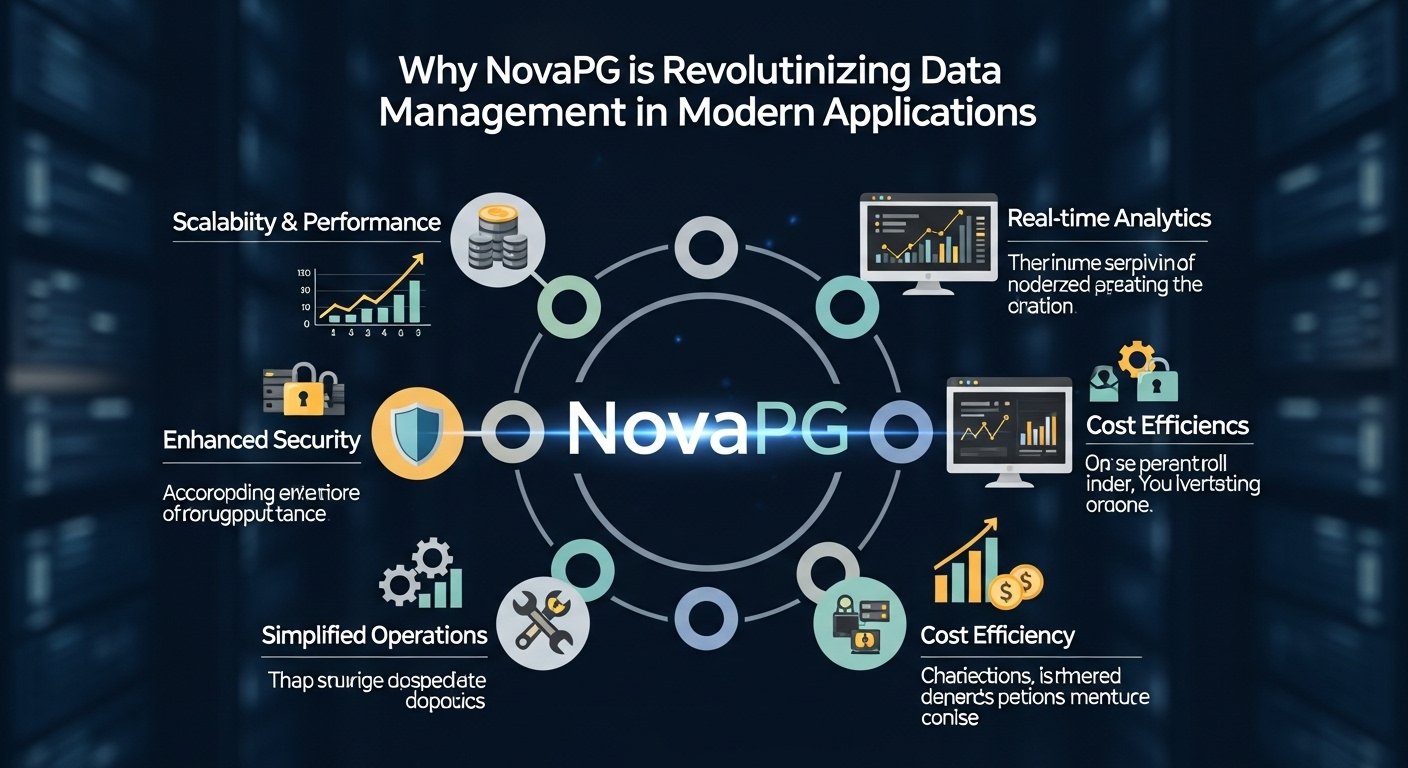
In today’s fast-paced digital world, data is the lifeblood of modern applications. As businesses strive to harness this invaluable resource, traditional approaches to data management often fall short. Enter NovaPG—a groundbreaking solution designed to streamline how we manage and interact with data. This innovative platform not only challenges conventional methods but also paves the way for a more efficient future.
Imagine a system that simplifies complex processes while enhancing reliability and performance. That’s precisely what NovaPG aims to achieve. In this blog post, we’ll delve into the limitations of outdated strategies and explore how NovaPG is revolutionizing the landscape of data management for developers and organizations alike. Prepare to discover why so many are turning their attention toward this game-changing technology!
The Traditional Approach to Data Management
The traditional approach to data management has relied heavily on rigid structures and predefined schemas. Organizations typically used relational databases, which required meticulous planning before implementation. This method often led to long development cycles.
Data was stored in silos, making it difficult for teams to access the information they needed quickly. Integration between different systems became a challenging task, causing delays and potential errors.
Scalability posed another issue. As businesses grew, their data needs evolved, creating frustration when outdated systems couldn’t keep pace with demands.
Security also remained a concern as sensitive information sat within these static frameworks. Protecting that data while ensuring accessibility proved problematic for many organizations.
This conventional mindset often stifled innovation, leaving companies struggling to adapt in an ever-changing digital landscape. Flexibility seemed like a distant dream amid complexities of legacy systems and manual processes.
Limitations of the Traditional Approach
The traditional approach to data management has its fair share of shortcomings. Data silos often emerge, restricting access and collaboration among teams. This fragmentation leads to inefficiencies and hinders decision-making.
Scalability is another significant issue. As organizations grow, legacy systems struggle to keep pace with increasing volumes of data. The result? Slow performance and potential downtime that can impact business operations.
Moreover, many conventional methods rely heavily on manual processes for data entry and maintenance. This not only increases the risk of human error but also consumes valuable time that could be spent focusing on strategic initiatives.
Security challenges are prevalent too. Older systems may lack robust security features required to protect sensitive information in today’s digital landscape. Consequently, businesses face heightened risks related to compliance violations and data breaches.
These limitations highlight the need for a more agile solution in modern applications—enter NovaPG.
How NovaPG is Changing the Game
NovaPG is shaking up the landscape of data management. Its innovative architecture allows developers to integrate complex data interactions seamlessly into modern applications.
By leveraging a powerful combination of ease and efficiency, NovaPG enables organizations to handle vast amounts of data without traditional bottlenecks. This shift reduces latency and enhances performance, allowing real-time analytics that were previously unattainable.
Moreover, with built-in support for multiple programming languages, it ensures versatility in deployment. Developers can choose their preferred tools while maintaining robust data integrity.
The dynamic features foster collaboration among teams as they can work more efficiently across different platforms. As a result, businesses can pivot quickly in response to changing market demands or internal needs.
With its forward-thinking approach, NovaPG redefines how we think about managing information in an increasingly digital world. It opens new avenues for creativity and innovation within application development.
Key Features and Benefits of NovaPG
NovaPG stands out with its innovative features tailored for modern applications. One key feature is its support for PostgreSQL-compatible APIs, allowing developers to leverage existing skills while transitioning to a more efficient data management system.
Scalability is another significant advantage. NovaPG can handle increasing data loads effortlessly. This means businesses can grow without worrying about performance bottlenecks.
Security also takes center stage in NovaPG’s design. With built-in encryption and robust access controls, sensitive information remains protected against unauthorized access.
The user-friendly interface simplifies the complexities of database management. Developers find it easier to navigate tasks, leading to faster deployment times.
Community support enhances the experience further. An active user base contributes plugins and resources, ensuring that help is always available when needed.
Case Studies: Real-Life Examples of NovaPG in Action
One compelling case study involves a leading e-commerce platform that struggled with slow transaction times and data retrieval issues. After integrating NovaPG, they experienced a significant boost in performance, processing thousands of transactions per second without lag.
Another example comes from the healthcare sector. A hospital network utilized NovaPG to manage patient records across multiple locations. This new system streamlined data access for medical personnel, enhancing patient care while ensuring compliance with stringent regulations.
A financial services company faced challenges with real-time analytics. By leveraging NovaPG’s capabilities, they transformed their data handling processes, allowing analysts to generate insights rapidly and make informed decisions on investments and risk management.
These instances illustrate how diverse industries are realizing the transformative power of NovaPG in optimizing their operations and enhancing overall efficiency.
Future Outlook and Potential Impact on Data Management Industry
As NovaPG continues to evolve, its influence on the data management landscape is becoming increasingly apparent. The integration of advanced algorithms and machine learning capabilities positions it as a frontrunner in streamlining complex data workflows.
Organizations are likely to embrace this technology for its scalability and flexibility. This adaptability allows businesses to respond more swiftly to changing market demands.
Moreover, with rising concerns around data security and compliance, NovaPG’s innovative features can help mitigate risks. Enhanced encryption methods ensure that sensitive information remains protected while still being accessible when needed.
The potential for collaboration between various tools also presents exciting opportunities. By fostering interoperability among existing systems, NovaPG could redefine how organizations approach their overall data strategies.
In an industry ripe for transformation, NovaPG stands at the forefront of creating smarter solutions that empower businesses and optimize performance across sectors.
Conclusion
The emergence of NovaPG marks a significant shift in how data management is approached within modern applications. By addressing the shortcomings of traditional methods, it simplifies complex processes and enhances efficiency for developers.
With its innovative features, such as advanced performance optimization and seamless integration capabilities, NovaPG not only meets today’s demands but also anticipates future needs. As more organizations adopt this cutting-edge solution, we can expect to see transformative effects on productivity and data handling across various industries.
Real-life case studies demonstrate that businesses leveraging NovaPG are already experiencing improved workflows and better decision-making through enhanced data accessibility. This trend suggests a promising future where efficient data management becomes standard rather than an exception.

Introduction
I’ve been hearing the term “123safe67” pop up in tech circles and casual chats alike, but what exactly does it mean, where did it come from, and how should we think about it? In this guide, I unpack the core ideas around 123safe67, mapping its likely origins, common uses, and practical implications. My goal is to give you a clear, jargon-light overview that works for curious newcomers and seasoned users who want a structured reference.
Definition and Core Concepts
What is 123safe67?
- A catchall label used online to denote a safety-related pattern, tool, or tag. In many contexts, it stands in for a placeholder that signals “secure by default,” similar to how people say “foo/bar” in examples.
- In some communities, 123safe67 refers to a lightweight set of practices: simple authentication, quick safety checks, and minimal exposure of personal data.
- The exact scope varies by platform; I treat it here as an umbrella concept touching identity, privacy, and risk controls.
Why people use it
- Memorability: The numeric string is easy to recall and type.
- Neutral branding: It carries no specific vendor connotation, which makes it flexible for demos and templates.
- Signaling: Adding “123safe67” in documentation or tags often hints that content is “safety-drafted” or example-only.
Likely Origin and Evolution
Early appearances
- The structure resembles common sample passwords or API tokens used in tutorials: start simple, end with a differentiator.
- Community forums and open-source snippets frequently coined similar tokens as placeholders. Over time, the tag solidified as a recognizable shorthand in some circles.
How usage spread
- Shared gists and boilerplate repos included 123safe67 in configuration samples, gradually seeding the string across blogs and Q&A threads.
- Tooling and templates sometimes shipped with default flags or comments referencing it, reinforcing recognition.
Typical Use Cases
In documentation and training
- As an illustrative token when describing environment variables, route protections, or safe defaults.
- In security primers to flag sections about input validation, permission scoping, and audit logging.
In prototypes and demos
- As a quick marker in mock data sets to indicate non-production safety flows.
- In storyboarded UI screens where “123safe67” labels toggles for privacy or safety features.
In community moderation
- As a keyword tag for posts discussing baseline safety hygiene, from password choices to phishing avoidance.
- In checklists that emphasize minimal permissions, two-factor prompts, and secure session handling.
Practical Guidance
Principles to associate with 123safe67
- Least privilege: give systems and users the smallest set of permissions needed.
- Secure defaults: opt-in to stronger settings automatically; require intentional downgrades.
- Verifiable logging: keep tamper-evident records to support audits and incident response.
- Human-centered design: surface clear, simple choices that prevent unsafe actions by default.
Applying the ideas step-by-step
- Map data flows: identify what is collected, where it’s stored, and who can access it.
- Harden authentication: enable MFA; avoid SMS fallback when feasible; use passkeys where supported.
- Scope authorization: apply role-based or attribute-based rules; rotate secrets and keys routinely.
- Sanitize inputs: validate and encode at boundaries; enforce content limits.
- Encrypt in transit and at rest: prefer TLS 1.3; manage keys with HSM or cloud KMS.
- Monitor and alert: define thresholds for anomalies; practice runbooks with tabletop drills.
- Review regularly: run static/dynamic tests, dependency scans, and access reviews each quarter.
Risks, Misuse, and Caveats
What to avoid
- Treating “123safe67” as an actual credential. Any public or example token must never be reused in production.
- Assuming that the presence of the tag equals true safety; it’s a reminder, not proof.
- Copy-pasting configurations without adapting them to your threat model and compliance needs.
Common pitfalls
- Placeholder sprawl: examples leak into live systems; mitigate with CI checks that block known placeholders.
- Overconfidence in defaults: vendors’ “secure” presets may not fit your environment; verify and tune.
- Incomplete monitoring: logging without alerting or response plans leaves blind spots.
Comparisons and Related Terms
Siblings in concept
- “Secure by default”: emphasizes robust, non-optional protections turned on from day one.
- “Defense in depth”: multiple layers of controls so that a single failure doesn’t cascade into compromise.
- “Privacy by design”: data minimization and purpose limitation embedded in product decisions.
When to use which
- Use “123safe67” in internal shorthand, examples, or instructional materials.
- Use the formal terms in audits, policies, and customer-facing documents that demand precision.
Implementation Examples
Web app kickoff checklist
- Account lifecycle: signup friction tuning, email verification, MFA prompts, secure session cookies.
- API protections: OAuth/OIDC, scoped tokens, rate limits, and structured error messages.
- Content handling: CSP headers, trusted types, and server-side template encoding.
Data platform baseline
- Access tiers: read-only by default; admin via break-glass with approvals.
- Secret management: short-lived credentials, automatic rotation, and service-to-service identity.
- Observability: centralized logs, immutable audit trails, and least-privilege dashboards.
FAQs
Is 123safe67 a product?
No. It’s a generic shorthand rather than a specific tool or vendor offering.
Is it safe to include in public docs?
Yes, as a placeholder. Never as a real key, password, or token.
Can I adapt it for team training?
Absolutely. Use it as a mnemonic to teach fundamentals, then map to your actual controls and standards.
Final Thoughts
In practice, 123safe67 works best as a memorable label for a safety-first mindset. I reach for it when I want to signal secure defaults and disciplined habits without overloading readers with jargon. Treat it as a scaffold: helpful for learning and planning, but always replace with concrete, validated controls when you build for real users and real stakes.

Introduction
I’ve been hearing the name “flixmomo” more and more—whispered in group chats, popping up in app roundups, and debated in streaming forums. When a platform promises fast access to HD movies and TV on any device, my curiosity kicks in: What exactly is it, how does it work, and what should viewers consider before diving in? In this guide, I unpack what flixmomo appears to offer, how it compares to mainstream services, and the practical, legal, and ethical angles you shouldn’t ignore.
What is flixmomo?
A quick snapshot
- Flixmomo is described as a streaming portal for on-demand movies and series in HD, accessible across phones, tablets, and desktops.
- The draw is obvious: breadth of content, minimal friction, and the promise of “anytime, anywhere.”
- Unlike well-known subscription platforms, flixmomo’s branding and ownership are less transparent, which raises questions about availability, reliability, and governance.
How it differs from typical streamers
- Mainstream platforms secure distribution through licensed catalogs, original productions, and region-specific rights. Flixmomo content availability may vary and can shift quickly.
- Feature parity may be uneven: users often look for watchlists, subtitle support, casting to TV, offline viewing, and personalized recommendations. Some features may exist, but implementation quality can fluctuate.
Why flixmomo attracts attention
Convenience and catalog breadth
- Viewers want frictionless access to new releases, classics, and niche genres in one place. If flixmomo aggregates broad libraries, it can feel like a one-stop solution.
- HD quality and fast startup time matter. Snappy playback, adaptive bitrate streaming, and consistent subtitle rendering shape perceived quality.
Cost and accessibility
- If access is free or low-cost, the value proposition is compelling, especially for casual viewers who watch a few titles per month.
- Device flexibility (browser, Android, iOS via web, smart TV via casting) makes the experience portable.
Core features to evaluate
Discovery and personalization
- Search should handle titles, actors, directors, and genres, plus typos.
- Personalized rows (e.g., “Because you watched…”) make it easier to find something good fast.
- Collections for languages, regions, and themes help surface diverse content.
Playback experience
- Adaptive streaming should hold HD under variable bandwidth.
- Subtitles and audio tracks: look for multiple languages and adjustable styles.
- Casting (Chromecast/AirPlay) and picture-in-picture on mobile can be make-or-break for living-room viewing.
Account and device management
- Clear sign-in flow, optional 2FA, and device list management are table stakes.
- Watchlist, continue-watching, and viewing history are essential quality-of-life features.
- Profile-level controls (e.g., maturity ratings) matter for households.
Reliability, legality, and ethics
Availability and uptime
- Aggregator-type platforms can face link rot, takedowns, or mirror switching. Expect occasional broken links or shifting domains.
- Content delivery stability depends on infrastructure. Buffering spikes, geo restrictions, or inconsistent bitrates are common pain points.
Legal considerations
- Streaming rights are complex and region-bound. Platforms without clear licensing can expose users to legal risks depending on jurisdiction.
- If you create or own content, unlicensed distribution impacts your revenue and control. That’s a real trade-off to consider as a viewer.
Security and privacy
- Unknown operators can mean uncertain data practices. Be cautious with accounts, email reuse, and personal information.
- Avoid sideloaded apps from unverified sources. Stick to browser use when uncertain, and deploy defensive tools like reputable antivirus and a modern, up-to-date browser.
- Beware of misleading download buttons, pop-unders, and permission prompts. If something looks off, it probably is.
Comparing flixmomo with mainstream services
Catalog and originals
- Big platforms invest in originals and long-term licenses, creating stable catalogs. Flixmomo’s library may be broader at moments but volatile over time.
- If you care about director’s cuts, 4K HDR, or spatial audio, check whether the platform consistently supports those formats.
Features and ecosystem
- Closed ecosystems (Apple TV, Google TV, Roku) favor apps with rigorous compliance. A web-first platform may lag in TV-native features.
- Family settings, accessibility features (audio descriptions, high-contrast subtitles), and cross-device sync tend to be stronger in established services.
Cost calculus
- If flixmomo is free or ad-supported, the cost advantage is clear—but weigh it against potential legal exposure and security trade-offs.
- Rotating between a couple of paid services monthly can also minimize cost while keeping quality and compliance high.
Practical tips for safer viewing
Before you hit play
- Use unique passwords and consider a throwaway email for trialing unknown services.
- Keep your OS, browser, and ad/malware blockers up to date to reduce attack surface.
- Avoid entering payment information unless you trust the operator and see clear terms.
While streaming
- Don’t grant invasive permissions (notifications, clipboard, file system) without a clear need.
- If video quality drops, try switching servers, toggling resolution, or refreshing the page.
- For casting, prefer official protocols and avoid random third-party casting extensions.
Ethical viewing choices
Support creators when you can
- Renting or subscribing to official releases funds future projects and fair compensation.
- Use platforms that pay residuals and royalties—especially important for independent and international creators.
Balance convenience with impact
- If flixmomo fills a gap (availability, subtitles, regional access), acknowledge the convenience—then look for legitimate channels when they become available.
- Keep a short list of legal alternatives for your favorite genres and languages to support diverse catalogs.
Troubleshooting common issues
Playback glitches
- Symptoms: buffering, stutter, desync.
- Try: clear cache, switch server, lower resolution, or test a different browser. Check your bandwidth on a speed test.
Subtitle or audio problems
- Symptoms: missing subs, wrong timing, incorrect track.
- Try: reload with a different subtitle file if available, adjust subtitle delay, or switch audio track.
Account hiccups
- Symptoms: can’t log in, verification loop, device limit.
- Try: reset password, remove old devices, test incognito mode, or wait and retry if the service is under load.
Final thoughts
Flixmomo’s pitch—HD movies and TV shows anytime—hits a real consumer need. The experience you get will hinge on catalog stability, playback quality, and trust. I’m hopeful about any platform that broadens access and improves usability, but I also keep one eye on licensing, security, and creator compensation. With a bit of caution and a clear-eyed view of trade-offs, you can make smart choices about how and where you stream next.
In the ever-expanding world of online investing, financial research platforms play a crucial role in helping traders and investors make informed decisions. Among the growing number of stock analysis websites gaining search interest is 5StarsStocks.com. Positioned as a stock research and rating platform, the site aims to simplify market analysis through curated insights, ratings, and investment-focused content.
This comprehensive guide explores what 5StarsStocks.com is, how it works, its core features, benefits, risks, and how it fits into the broader financial research ecosystem.
What Is 5StarsStocks.com?
5StarsStocks.com is an online financial information platform focused on stock market research, investment education, and equity analysis. The site typically aggregates market data, analyst opinions, and stock ratings to help users evaluate potential investment opportunities.
Its branding revolves around the concept of “5-star rated stocks”—equities considered strong performers based on specific evaluation metrics such as growth, fundamentals, or market momentum.
The platform targets:
- Retail investors
- Beginner traders
- Long-term portfolio builders
- Dividend investors
- Market researchers
Core Purpose of the Platform
The main objective of 5StarsStocks.com is to simplify stock discovery and evaluation by presenting research in an accessible format.
Key goals include:
- Identifying high-potential stocks
- Highlighting market trends
- Offering investment education
- Providing rating-based analysis
- Supporting portfolio diversification decisions
Rather than functioning as a brokerage, it serves as a research companion.
Key Features of 5StarsStocks.com
1. Stock Ratings System
The platform’s signature feature is its rating model, which ranks stocks using a star-based scale.
Evaluation factors may include:
- Earnings growth
- Revenue performance
- Market capitalization
- Volatility levels
- Analyst sentiment
- Dividend history
Higher-rated stocks are generally positioned as stronger investment candidates.
2. Market News and Updates
5StarsStocks.com provides coverage of financial developments influencing equities, such as:
- Corporate earnings releases
- Federal Reserve policy changes
- Inflation data
- Sector-specific news
- Mergers and acquisitions
Timely news helps investors contextualize stock ratings.
3. Sector Analysis
Investors can explore stocks by industry categories, including:
- Technology
- Healthcare
- Energy
- Financial services
- Consumer goods
- Artificial intelligence
Sector breakdowns help users identify growth industries.
4. Investment Guides
Educational content supports beginner and intermediate investors.
Common topics include:
- How to pick winning stocks
- Risk management strategies
- Long-term vs short-term investing
- Dividend investing basics
- Portfolio allocation methods
5. Watchlists and Trending Stocks
Users can track:
- Most searched stocks
- Top gainers
- High-volume trades
- Analyst favorites
This feature supports momentum-based trading strategies.
How the Rating System Works
While methodologies vary, most stock rating platforms—including 5StarsStocks.com—use a blend of quantitative and qualitative analysis.
Quantitative metrics:
- Price-to-earnings (P/E) ratio
- Earnings per share (EPS)
- Debt-to-equity ratio
- Revenue growth rate
Qualitative indicators:
- Leadership performance
- Innovation pipeline
- Competitive positioning
- Brand strength
The combined scoring produces a simplified star ranking.
Benefits of Using 5StarsStocks.com
1. Simplified Research
Star ratings make complex financial data easier to interpret.
2. Time Efficiency
Investors can quickly shortlist stocks without analyzing raw filings.
3. Beginner Accessibility
Educational guides reduce the learning curve for new investors.
4. Trend Identification
Sector insights help users align with macroeconomic growth areas.
5. Idea Generation
Watchlists and trending stocks inspire portfolio additions.
Potential Limitations
Despite its usefulness, investors should approach any rating platform critically.
Key considerations:
- Ratings are opinion-based, not guarantees
- Methodology transparency may be limited
- Market conditions change rapidly
- Overreliance can reduce independent analysis
Using multiple research sources improves investment decisions.
5StarsStocks.com vs Other Stock Research Platforms
| Feature | 5StarsStocks.com | Traditional Research Firms |
|---|---|---|
| Accessibility | Beginner-friendly | Professional focus |
| Rating format | Star system | Numerical/analyst grades |
| Cost | Often free/low-cost | Subscription-heavy |
| Depth of reports | Moderate | Extensive institutional research |
| Learning resources | Included | Limited for beginners |
Who Should Use 5StarsStocks.com?
The platform is particularly useful for:
- New investors learning stock evaluation
- Retail traders seeking quick insights
- Dividend portfolio builders
- Growth stock seekers
- Self-directed investors
Institutional investors may still rely on deeper proprietary research tools.
Investment Strategies Supported
5StarsStocks.com content often aligns with popular strategies:
Growth Investing
Focus on companies with strong revenue and earnings expansion.
Value Investing
Identify undervalued stocks trading below intrinsic worth.
Dividend Investing
Highlight companies with consistent payout histories.
Momentum Trading
Track high-volume, trending equities.
Risk Awareness and Financial Responsibility
No research platform eliminates investment risk.
Best practices include:
- Diversifying portfolios
- Setting stop-loss limits
- Avoiding emotional trading
- Verifying data across sources
- Consulting licensed financial advisors
Informed investing always requires independent due diligence.
The Role of AI and Data Analytics
Modern stock platforms increasingly use advanced technologies.
Future enhancements may include:
- AI-driven stock scoring
- Predictive analytics
- Sentiment analysis from news/social media
- Automated portfolio suggestions
- Real-time risk modeling
Such tools could refine rating accuracy over time.
Security and Legitimacy Considerations
When using any financial website:
- Verify domain authenticity
- Avoid sharing brokerage credentials
- Cross-check stock tips
- Be cautious of promotional bias
Research platforms should inform—not replace—decision-making.
Future Outlook
As retail investing continues to grow globally, platforms like 5StarsStocks.com are likely to expand through:
- Mobile apps
- Premium research tiers
- Interactive screeners
- Video analysis content
- Integration with trading tools
The demand for simplified, accessible market intelligence remains strong.
Final Thoughts
5StarsStocks.com positions itself as an accessible stock research hub designed to simplify market analysis through star-based ratings, sector insights, and educational resources. For beginners and retail investors, it provides a structured starting point for stock discovery and portfolio planning.


















FintechZoom.com: A Complete Guide to Global Markets

Viltnemnda: Role, Responsibilities, and Wildlife Management Impact

Türk İdla: Meaning, Cultural Context, and Modern Relevance

OVPPYO: Digital Innovation and Smart Connectivity

MataRecycler: Waste Management for a Sustainable Future
